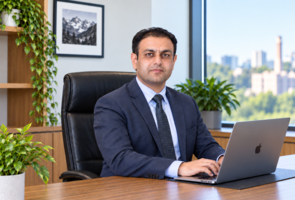
Dr. Muhammad Asif Ali
Assistant Professor
PhD in Computer Science and Engineering, University of New South Wales (UNSW), Australia
RESEARCH INTERESTS
Large language models (llms), with interests in training and adapting foundation models, reasoning, reinforcement learning and preference optimization, knowledge reasoning and editing, multilingual and multimodal AI, interpretability, and trustworthy and responsible AI. A central theme of his work is the development of more reliable, verifiable, adaptive, and transparent AI systems, with particular emphasis on improving reasoning capabilities through reinforcement learning, formal verification, solver-guided methods, and context-aware alignment. More broadly, his research spans Artificial Intelligence, Natural Language Processing, Machine Learning, Information Retrieval, and Data Management, with an increasing focus on the training, alignment, and evaluation of reasoning-centric foundation models, as well as human-aligned, multilingual, and multimodal intelligent systems. His work has appeared in leading international conferences and journals across these areas.
Biography
He obtained his Ph.D. in Computer Science and Engineering from the University of New South Wales (UNSW), Australia, in 2021. His research spans artificial intelligence, foundation models, natural language processing, machine learning, and information retrieval. He was among the early researchers exploring graph convolution-based approaches for denoising and learning representations from naturally occurring data. Prior to joining ITU, he worked as a Researcher at the Shenzhen Institute of Computing Sciences, a Postdoctoral Researcher at King Abdullah University of Science and Technology (KAUST), and an AI Solutions Consultant with the ALT Research Group at Qatar Computing Research Institute (QCRI). At KAUST, his research included the development and adaptation of Arabic foundation models and multilingual AI systems. He has also contributed to and helped secure competitively funded research projects supported by ICT-RnD, OpenAI, KAUST, the Research, Development and Innovation Authority (RDIA), Saudi Arabia, and Saudi Aramco. Over the course of his academic and research career, he has won research funding accumulating more than US$5 million.