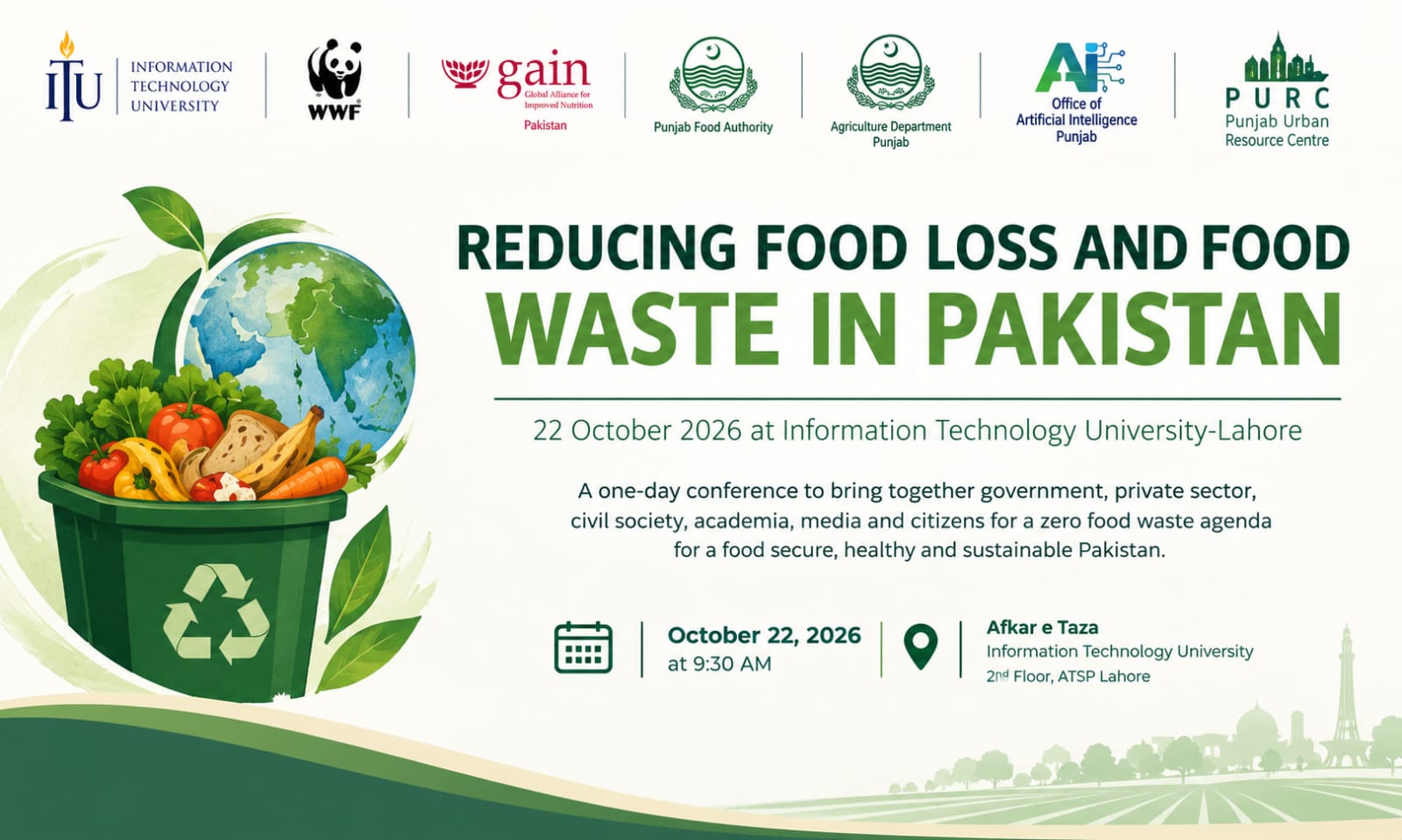
Commemorating International Day of Awareness of Food Loss and Waste (IDAFLW) and World Food Day at the ITU in collaboration with WWF-Pakistan, GAIN-Pakistan, Punjab Food Authority, Agriculture Department, Office of Artificial Intelligence, and Punjab Urban Resource Centre.
While this year’s theme of International Day of Awareness of Food Loss and Waste (IDAFLW) Transformative Potential of Reducing Food Loss and Waste and that of World Food Day is Innovate Today, Nourish Tomorrow, it is unfortunate that Pakistan finds a mention among the countries which top the list of food wasters in the world. The enormously rising quantities of food losses and food waste across the food and eating chains, and household kitchens in Pakistan testifies this observation.
This situation demands response as Pakistan is becoming synonymous with being wasteful considering the water shortages, food insecurities, hunger- and climate-induced agrifood crises. It is surprising that a place which has historically been associated with food ethics and zero waste is fast becoming the most wasteful place, which is leading to food insecurity. Unchecked, it is growing into wicked proportions requiring rigorous analyses and debates crossing disciplinary boundaries and departmental siloes in the government.
Pakistan has often demonstrated strong commitments but rising population, food chain design, urbanization, limited penetration of food regulation, and lack of food literacy are interacting in complex ways to increase food losses and waste. A number of initiatives are already being undertaken through various departments and policies. These include smart agriculture, water-sensitive crops, crop diversification, silos, better roads for supply chains, food literacy, and advocacy for responsible consumption. The carving of future for zero food loss and waste requires conversations with reference to the workings of these initiatives.
We are beginning these conversations by holding a one-day conference of the stakeholders at the Information Technology University of the Punjab, Arfa Karim Tower, Lahore. The conference will play a key role in shaping zero food waste agenda for public, private, civil society, academia, media, and citizens for the future of Pakistan. Food, in all of its various aspects, is a matter which crosses ideological and sectoral boundaries as it involves the questions of caring for the planet—and not overburdening it with growing food that will be wasted or lost while mouths need to be fed, and planet needs to be given rest from unnecessary burdens.
The objective of the conference is to tackle FLW that will generate a triple win for Pakistan: improving food security and nutrition, reducing pressure on natural resources and greenhouse gas emissions, and enhancing productivity and economic growth.