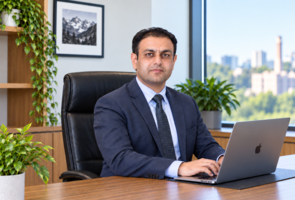
Dr. Muhammad Asif Ali

Assistant Professor

PhD in Computer Science and Engineering, University of New South Wales (UNSW), Australia

  • muhammadasif@itu.edu.pk

RESEARCH INTERESTS

Large language models (llms), with interests in training and adapting foundation models, reasoning, reinforcement learning and preference optimization, knowledge reasoning and editing, multilingual and multimodal AI, interpretability, and trustworthy and responsible AI. A central theme of his work is the development of more reliable, verifiable, adaptive, and transparent AI systems, with particular emphasis on improving reasoning capabilities through reinforcement learning, formal verification, solver-guided methods, and context-aware alignment. More broadly, his research spans Artificial Intelligence, Natural Language Processing, Machine Learning, Information Retrieval, and Data Management, with an increasing focus on the training, alignment, and evaluation of reasoning-centric foundation models, as well as human-aligned, multilingual, and multimodal intelligent systems. His work has appeared in leading international conferences and journals across these areas.

Biography

He obtained his Ph.D. in Computer Science and Engineering from the University of New South Wales (UNSW), Australia, in 2021. His research spans artificial intelligence, foundation models, natural language processing, machine learning, and information retrieval. He was among the early researchers exploring graph convolution-based approaches for denoising and learning representations from naturally occurring data. Prior to joining ITU, he worked as a Researcher at the Shenzhen Institute of Computing Sciences, a Postdoctoral Researcher at King Abdullah University of Science and Technology (KAUST), and an AI Solutions Consultant with the ALT Research Group at Qatar Computing Research Institute (QCRI). At KAUST, his research included the development and adaptation of Arabic foundation models and multilingual AI systems. He has also contributed to and helped secure competitively funded research projects supported by ICT-RnD, OpenAI, KAUST, the Research, Development and Innovation Authority (RDIA), Saudi Arabia, and Saudi Aramco. Over the course of his academic and research career, he has won research funding accumulating more than US$5 million.

  1. Toghrul Abbasli, Kentaroh Toyoda, Yuan Wang, Leon Witt, Muhammad Asif Ali, Yukai Miao, Dan Li, and Qingsong Wei. “Comparing Uncertainty Measurement and Mitigation Methods for Large Language Models: A Systematic Review.” IEEE Transactions on Neural Networks and Learning Systems (TNNLS), 2026.
  2. Qirui Zheng, Xingbo Wang, KeYuan Cheng, Yunlong Lu, Muhammad Asif Ali, Lingfeng Li, Yongyi Wang, and Wenxin Li. “From Multimodal Perception to Strategic Reasoning: A Survey on AI-Generated Game Commentary.” International Joint Conference on Artificial Intelligence and European Conference on Artificial Intelligence (IJCAI-ECAI), 2026.
  3. Ruohan Yang*, Muhammad Asif Ali*, Anyu Xue, Junyang Chen, Huan Wang, and Di Wang. “Generative Regularities in Multi-Layer Networks: A Shared Latent Space Representation Approach.” ACM Transactions on the Web (TWEB), 2026.
  4. Ruohan Yang*, Muhammad Asif Ali*, Huan Wang, Z. Zhang, Junyang Chen, and Di Wang. “PRISM: Link Prediction in Attributed Networks with Uncertain Modalities.” IEEE Transactions on Knowledge and Data Engineering (TKDE), 2026.
  5. Keyuan Cheng, Zijian Kan, Zhixian He, Zhuoran Zhang, Muhammad Asif Ali, Ke Xu, Lijie Hu, and Di Wang. “COMPKE: Complex Question Answering under Knowledge Editing.” Findings of the Association for Computational Linguistics (ACL Findings), 2025.
  6. Keyuan Cheng, Xudong Shen, Yihao Yang, Tengyue Wang, Yang Cao, Muhammad Asif Ali, Hanbin Wang, Lijie Hu, and Di Wang. “CODEMENV: Benchmarking Large Language Models on Code Migration.” Findings of the Association for Computational Linguistics (ACL Findings), 2025.
  7. Ruohan Yang*, Muhammad Asif Ali*, Huan Wang, Junyang Chen, and Di Wang. “LUSTER: Link Prediction Utilizing Shared-Latent Space Representation in Multi-Layer Networks.” ACM Web Conference (WWW), 2025.
  8. Yifan Hong*, Muhammad Asif Ali*, Huan Wang, Junyang Chen, and Di Wang. “Mitigating Sample Imbalance in Anomaly Detection within Dynamic Graphs.” International Joint Conference on Artificial Intelligence (IJCAI), 2025.
  9. Muhammad Asif Ali, Nawal Daftardar, Mutayyba Waheed, Jianbin Qin, and Di Wang. “MQA-KEAL: Multi-hop Question Answering under Knowledge Editing for Arabic Language.” International Conference on Computational Linguistics (COLING), 2025.
  10. Keyuan Cheng, Gang Lin, Haoyang Fei, Yuxuan Zhai, Lu Yu, Muhammad Asif Ali, Lijie Hu, and Di Wang. “Multi-Hop Question Answering under Temporal Knowledge Editing.” Conference on Language Modeling (COLM), 2024.
  11. Shu Yang*, Muhammad Asif Ali*, Lu Yu, Lijie Hu, and Di Wang. “Model Autophagy Analysis to Explicate Self-Consumption within Human-AI Interactions.” Conference on Language Modeling (COLM), 2024.
  12. * Equal contribution, where applicable.
  1. Competitive Research Travel Award, University of New South Wales (UNSW), Australia, 2020.
  2. Annual Research Grant Award, Data to Decisions Cooperative Research Centre (D2D CRC), Australia, 2019.
  3. Australian Government–Funded International Student Scholarship, Data to Decisions Cooperative Research Centre (D2D CRC), supporting law-enforcement and national-security research, Australia, 2016–2021.
  4. PhD Research Award in Knowledge Graph Curation, Data to Decisions Cooperative Research Centre (D2D CRC), Australia, 2016–2020.
  5. One Health Surveillance Innovation Award (OH-Viewer), International Society for Disease Surveillance (ISDS), USA, 2015.
  6. 3rd Position, Board of Intermediate and Secondary Education (BISE), Punjab, Pakistan, 2007.
  • AI Solutions Consultant, ALT Research Group, Qatar Computing Research Institute (QCRI), Qatar
  • Postdoctoral Researcher, King Abdullah University of Science and Technology (KAUST), Saudi Arabia
  • Researcher, Shenzhen Institute of Computing Sciences, China
  • Teaching Assistant, University of New South Wales (UNSW), Sydney, Australia