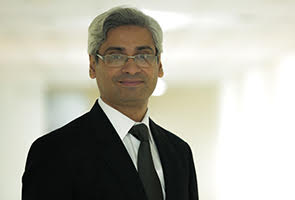
Dr. Haris Mehmood

Assistant Professor

PhD - Electrical Engineering, NUST

  • haris.mehmood@itu.edu.pk

RESEARCH INTERESTS

Dr. Haris Mehmood’s research interests lies in the following areas:

  • Semiconductors
  • TCAD Simulation
  • Thin-film fabrication and characterization
  • Optoelectronics and Photonics
  • Smart Energy Systems using IoT/AI
  • Nanotechnology in Renewable Energy Systems

Biography

Dr. Haris Mehmood has accomplished his Ph.D. in Electrical Engineering from National University of Sciences and Technology (NUST). During his Ph.D. studies, he was awarded the TÜBİTAK Research Fellowship and proceeded to Middle East Technical University (METU) in Turkey where he gained considerable experience in the area of semiconductors and the development of photovoltaic devices. He has successfully incorporated the dopant-free thin film of Transition Metal Oxide for improving their charge transportation characteristics as well as mitigating thermal losses. He has demonstrated proven experience in vigorous physical device modeling and experimental investigations e.g., stoichiometry composition analysis, optical transmittance, Sinton Carrier Lifetime measurement using QPSSC and Transient mode, work function, defects analysis, surface analysis, Solar IV tester, Suns-Voc measurement, etc. His research work has been published in prestigious SCI-indexed journals such as Renewable Energy, Solar Energy, and International Journal of Energy Research etc.

Dr. Haris is an HEC Approved Ph.D. Supervisor and has ample teaching experience. In recognition of his teaching excellence, he has been awarded the Best University Teacher Award by ITU. He is also a certified Associate Fellow (AFHEA) of Advance Higher Education United Kingdom (UK) which recognizes his teaching practice in line with the UK’s Professional Standards Framework. He has won several FYP grants under the IGNITE program of the Government of Pakistan. Dr Haris also has an active research collaboration ongoing with several international universities. During his tenure at ITU, he has significantly contributed in various capacities to incorporate the Outcome-Based Education (OBE) philosophy in the curriculum of the Electrical Engineering degree program.

  1. [1]      M. Gülnahar, H. Mehmood, H. Hüseyin Canar, and H. Nasser, “Analysis on the capacitance-voltage characteristics of metal-insulator-semiconductor capacitors based on thermally evaporated WOx on n- and p- type crystalline silicon,” Mater. Sci. Eng. B, vol. 304, p. 117379, 2024, doi: https://doi.org/10.1016/j.mseb.2024.117379.
  2. [2]      R. U. Rahman et al., “Progress in TOPCon solar cell technology: Investigating hafnium oxide through simulation,” Curr. Appl. Phys., vol. 63, pp. 96–104, 2024, doi: 10.1016/j.cap.2024.04.001.
  3. [3]      H. Mehmood and H. Nasser, “TCAD simulation of germanium-based heterostructure solar cell employing molybdenum oxide as a hole-selective layer,” Model. Simul. Mater. Sci. Eng., vol. 32, no. 6, p. 65020, 2024, doi: 10.1088/1361-651X/ad5b7b.
  4. [4]      S. Ijaz et al., “A numerical approach to optimize the performance of HTL-free carbon electrode-based perovskite solar cells using organic ETLs,” Heliyon, vol. 10, no. 7, pp. e29091–e29091, Apr. 2024, doi: 10.1016/j.heliyon.2024.e29091.
  5. [5]      I. H. Syed, S. Ijaz, M. Ali, H. Mehmood, N. Mahmood, and M. Q. Mehmood, “Unlocking the Sun’s potential: solar cell design empowered through BSF+ layer using Silvaco TCAD,” in Proc.SPIE, Jun. 2024, pp. 130140B-130140B. doi: 10.1117/12.3022101.
  6. [6]      F. Rehman et al., “Fourth-generation solar cells: a review,” Energy Adv., vol. 2, pp. 1239–1262, 2023, doi: 10.1039/D3YA00179B.
  7. [7]      S. Ijaz et al., “Numerical simulation to optimize the efficiency of HTM-free perovskite solar cells by ETM engineering,” Sol. Energy, vol. 250, pp. 108–118, 2023, doi: https://doi.org/10.1016/j.solener.2022.12.027.
  8. [8]      H. Mehmood, H. Nasser, S. M. H. Zaidi, T. Tauqeer, and R. Turan, “Physical device simulation of dopant-free asymmetric silicon heterojunction solar cell featuring tungsten oxide as a hole-selective layer with ultrathin silicon oxide passivation layer,” Renew. Energy, vol. 183, pp. 188–201, 2022, doi: https://doi.org/10.1016/j.renene.2021.10.073.
  9. [9]      H. Mehmood, H. Nasser, T. Tauqeer, and R. Turan, “Numerical analysis of dopant-free asymmetric silicon heterostructure solar cell with SiO2 as passivation layer,” Int. J. Energy Res., vol. 44, no. 13, pp. 10739–10753, Oct. 2020, doi: 10.1002/er.5720.
  10. [10]    A. Ahmed, K. Riaz, H. Mehmood, T. Tauqeer, and Z. Ahmad, “Performance optimization of CH3NH3Pb(I1-xBrx)3 based perovskite solar cells by comparing different ETL materials through conduction band offset engineering,” Opt. Mater. (Amst)., vol. 105, p. 109897, 2020, doi: https://doi.org/10.1016/j.optmat.2020.109897.
  11. [11]    M. Tanveer, T. Tauqeer, H. Mehmood, H. T. Butt, J. Sexton, and M. Missous, “Physical device modelling of emitter–base junction of In0.52Al0.48As/In0.53Ga0.47As-based SHBTs,” Int. J. Electron., vol. 106, no. 11, pp. 1710–1725, Nov. 2019, doi: 10.1080/00207217.2019.1611944.
  12. [12]    H. Mehmood, H. Nasser, T. Tauqeer, and R. Turan, “Simulation of silicon heterostructure solar cell featuring dopant-free carrier-selective molybdenum oxide and titanium oxide contacts,” Renew. Energy, vol. 143C, pp. 359–367, 2019, doi: https://doi.org/10.1016/j.renene.2019.05.007.
  13. [13]    H. Mehmood, G. Bektaş, İ. Yıldız, T. Tauqeer, H. Nasser, and R. Turan, “Electrical, optical and surface characterization of reactive RF magnetron sputtered molybdenum oxide films for solar cell applications,” Mater. Sci. Semicond. Process., vol. 101, pp. 46–56, 2019, doi: https://doi.org/10.1016/j.mssp.2019.05.018.
  14. [14]    S. Hussain, H. Mehmood, M. Khizar, and R. Turan, “Design and analysis of an ultra-thin crystalline silicon heterostructure solar cell featuring SiGe absorber layer,” IET Circuits, Devices Syst., vol. 12, no. 4, pp. 309-314(5), Jul. 2018, doi: 10.1049/iet-cds.2017.0132.
  15. [15]    W. Zaman, H. Ahmad, and H. Mehmood, “A Miniaturized Meandered Printed Monopole Antenna for Triband Applications,” Microw. Opt. Technol. Lett., vol. 60, pp. 1265–1271, 2018, doi: 10.1002/mop.31149.
  16. [16]    H. Mehmood, H. Nasser, T. Tauqeer, and R. Turan, “Poster on Physical Device Simulation of Dopant-Free Silicon Solar Cell Based on Hole-Selective Molybdenum Oxide and Electron-Selective Titanium Oxide,” in 35th European Union Photovoltaic Solar Energy Conference and Exhibition (EU-PVSEC), Brussels, Belgium, Brussels, Belgium, 2018. [Online]. Available: https://www.eupvsec-proceedings.com/proceedings?fulltext=Haris+&paper=46074
  17. [17]    H. Mehmood, T. Tauqeer, and S. Hussain, “Recent progress in silicon-based solid-state solar cells,” Int. J. Electron., vol. 105, no. 9, pp. 1568–1582, Sep. 2018, doi: 10.1080/00207217.2018.1477191.
  18. [18]    H. Mehmood, H. Nasser, T. Tauqeer, S. Hussain, E. Ozkol, and R. Turan, “Simulation of an efficient silicon heterostructure solar cell concept featuring molybdenum oxide carrier-selective contact,” Int. J. Energy Res., vol. 42, no. 4, pp. 1563–1579, 2018, doi: 10.1002/er.3947.
  19. [19]    H. Mehmood, H. Nasser, E. Özkol, T. Tauqeer, S. Hussain, and R. Turan, “Physical Device Simulation of Partial Dopant-Free Asymmetric Silicon Heterostructure Solar Cell (P-DASH) based on Hole-selective Molybdenum Oxide (MoOx) with Crystalline Silicon (cSi),” in IEEE International Conference on Engineering and Technology (ICET2017), 21-23 August 2017, Antalya, Turkey, Antalya, Turkey: IEEE, 2017, pp. 1–6. doi: 10.1109/ICEngTechnol.2017.8308155.
  20. [20]    H. Mehmood, H. Nasser, T. Tauqeer, and R. Turan, “Numerical Analysis of Silicon Heterojunction Solar Cell Based on Molybdenum Oxide as a Back Surface Field (BSF),” in Proceedings 33rd European Photovoltaic Solar Energy Conference and Exhibition, 25 - 29 September 2017, Amsterdam, Holland, Amsterdam, Holland: EU PVSEC, 2017, pp. 932–936. doi: 10.4229/EUPVSEC20172017-2CV.2.66.
  21. [21]    H. Mehmood and T. Tauqeer, “Modelling and performance analysis of amorphous silicon solar cell using wide band gap nc-Si:H window layer,” IET Circuits, Devices Syst., vol. 11, no. 6, pp. 666-675(9), Nov. 2017, doi: 10.1049/iet-cds.2017.0072.
  22. [22]    R. Saroosh, T. Tauqeer, S. Afzal, and H. Mehmood, “Performance enhancement of AlGaN/InGaN MQW LED with GaN/InGaN superlattice structure,” IET Optoelectron., vol. 11, no. 4, pp. 156-162(6), Aug. 2017, doi: 10.1049/iet-opt.2016.0141.
  23. [23]    H. Mehmood, H. Nasser, T. Tauqeer, S. Hussain, and R. Turan, “Effect of Hole-Selective Molybdenum Oxide Work Function and Silicon Wafer Resistivity on Dopant-Free Asymmetric Silicon Heterostructure Solar Cell,” in IEEE 5th International Renewable and Sustainable Energy Conference, 4-7 December 2017, Tangier, Morocco, Tangier, Morocco: IEEE, 2017, pp. 1–5. doi: https://doi.org/10.1109/IRSEC.2017.8477335.
  24. [24]    H. Nasser, G. Kökbudak, H. Mehmood, and R. Turan, “Dependence of n-cSi/MoOx heterojunction performance on cSi doping concentration,” Energy Procedia, vol. 124, pp. 418–424, 2017, doi: https://doi.org/10.1016/j.egypro.2017.09.267.
  25. [25]    S. Hussain, H. Mehmood, and G. Ali, “Nanocrystalline Silicon (nc-Si:H) and amorphous silicon (a-Si:H)based thin-film multijunction solar cell,” Sains Malaysiana, vol. 43, no. 6, pp. 895–898, 2014.
  26. [26]      S. Hussain, G. Ali, H. Mehmood, M. Omar, and T. Zaidi, “Theoretical Studies of InGaN/GaN Multiple Junction Solar Cell with Enhanced Tunneling Junction Diode,” Adv. Mater. Res., vol. 895, pp. 535–538, 2014, doi: 10.4028/www.scientific.net/AMR.895.535.
  • FYP project titled "Smart Solar Powered Grass Cutter and Plant Sprayer" secured IGNITE grant of PKR 34,769 under my supervision at Information Technology University of the Punjab (ITU) Lahore dated 1 August 2023 (Project ID: NGIRI-2023-21397)
  • FYP project titled "Design and Development of an Indoor Air Purifier" secured IGNITE grant of PKR 16,950 under my supervision at Information Technology University of the Punjab (ITU) Lahore dated 1 August 2023 (Project ID: NGIRI-2023-21763)
  • FYP project titled "Autonomous solar panel cleaning robot" secured IGNITE grant under my co-supervision at Information Technology University of the Punjab (ITU) Lahore dated 1 August 2023 (Project ID: NGIRI-2023-20398)
  • FYP project titled "Intelligent Shopping Trolley using Auto Billing System" secured IGNITE grant of PKR 20,194 under my supervision at Information Technology University of the Punjab (ITU) Lahore dated 13 September 2022 (Project ID: NGIRI-2022-15077)
  • FYP project titled "IoT-Based Smart Helmet For Unsafe Event Detection For Mining Industry" secured IGNITE grant of PKR 24,570 under my supervision at Information Technology University of the Punjab (ITU) Lahore dated 13 September 2022 (Project ID: NGIRI-2022-12054)
  • FYP project titled "Smart Cane For Visually Impaired" secured IGNITE grant under my co-supervision at Information Technology University of the Punjab (ITU) Lahore dated 13 September 2022 (Project ID: NGIRI-2022-12232)
  • FYP project titled "Speak Through Eye Movement Glasses" secured IGNITE grant under my co-supervision at Information Technology University of the Punjab (ITU) Lahore dated 13 September 2022 (Project ID: NGIRI-2022-15265)
  • FYP project titled "MOBDIW: Monitoring Of Brainwaves For Development Of Intelligent Wheelchair", secured IGNITE grant of PKR 78,300 under my supervision at Information Technology University of the Punjab (ITU) Lahore dated 1 July 2021 (Project ID: NGIRI-2021-10761)
  • FYP project titled "IoT Enabled Water Metering for Domestic Consumers", secured IGNITE grant under my co-supervision at Information Technology University of the Punjab (ITU) Lahore dated 1 July 2021 (Project ID: NGIRI-2021-7375)
  • FYP project titled "S-HELM Smart Electrochemical gas detecting Helmet for Miners", secured IGNITE grant of PKR 35,666 under my supervision at Information Technology University of the Punjab (ITU) Lahore dated 4 August 2020 (Project ID: NGIRI-2020-3398)
  • FYP project titled "Impurity detection and filtration of water using biosensors and EDR", secured IGNITE grant of PKR 20,210 under my supervision at Information Technology University of the Punjab (ITU) Lahore dated 4 August 2020 (Project ID: NGIRI-2020-5361)
  • FYP project titled "Android Based Load Control and Monitoring System", secured NGIRI grant of PKR 67,750 under my supervision at The University of Faisalabad (TUF) Lahore dated 9 May 2014
    • Pakistan Engineering Council (PEC) Registered Engineer
    • Associate Fellow of Advance HE United Kingdom (AFHEA)
    • Institute of Engineering and Technology (IET) On Campus ITU Founding Supervisor
    • Reviewer of various SCI-cited journals
Research collaborations with METU Turkey, RMIT Australia
  • PhD Students: a. Muhammad Afzal, ITU 2022-Present (Co-supervisor)
  • MS Students: b. Aqsa Latif, ITU 2020-2023 (Graduated), Supervisor c. Iqrar Hussain Syed, ITU 2022-Present, Co-supervisor